Updating a bathroom to support mobility and accessibility isn’t just a renovation project it’s an investment in safety, independence, and comfort. Whether you’re preparing your home for aging in place, accommodating a loved one with limited mobility, or future proofing your property, thoughtful planning ensures a functional and beautiful space. Before choosing fixtures or calling contractors, make sure you’ve answered these five critical questions.
What Are the Primary Mobility Challenges You Need to Address?
The first step in any accessibility renovation is identifying the specific challenges the space needs to accommodate. Mobility limitations vary widely some individuals may require more stability while standing, while others need enough space for wheelchair maneuvering or transfer assistance.
Here’s how to break this down:
- Assess current limitations. Take note of where slips, struggles, or obstacles occur most often perhaps stepping over the tub, turning around in a narrow space, or reaching for fixtures.
- Consider future needs. Even if mobility issues are minimal now, they can change over time. Planning for adaptability helps you avoid another renovation a few years down the road.
- Consult professionals. An occupational therapist or certified aging-in-place specialist can evaluate your bathroom setup and recommend specific modifications suited to your household.
Once you understand the user’s needs, you’ll have a clearer picture of what changes such as barrier-free showers, grab bars, or widened doorways will make the biggest impact.
How Much Space Is Available for Modification?
Bathrooms can vary dramatically in layout and size, which directly affects which accessibility upgrades are practical. A common oversight is assuming that every mobility-friendly feature can fit into an existing footprint but spacing requirements are just as crucial as fixtures themselves.
To evaluate your space:
- Measure clearances. Wheelchair users typically need at least five feet of turning diameter. Narrow bathrooms might instead benefit from pocket doors or open shower entries.
- Prioritize movement paths. Think through how someone moves through the room from entry to sink to toilet to bathing area and minimize obstacles or tight corners.
- Work with your layout. If expanding the footprint isn’t an option, creative design solutions like fold-down seats, corner-mounted sinks, or compact fixtures can help preserve accessibility without major structural changes.
Which Fixtures Can Combine Safety with Comfort and Design?
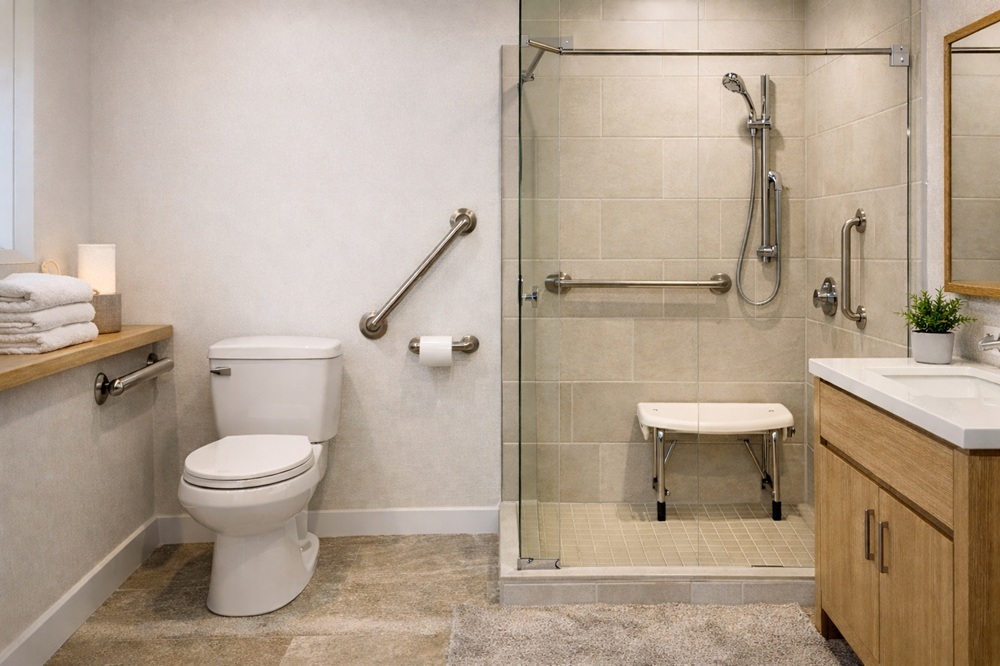
A frequent concern in mobility renovations is finding the balance between functionality and aesthetics. Fortunately, modern accessibility products have come a long way from institutional designs. Many fixtures now blend seamlessly with contemporary or classic bathroom styles while still offering safety and ease of use.
Some popular upgrades include:
- Walk-in tubs or low-threshold showers: These minimize trip hazards and can include built-in seating or hand-held shower heads.
- Comfort-height toilets: Slightly taller than standard models, these make it easier to sit and stand.
- Slip-resistant flooring: Vinyl, textured tile, or rubber floors prevent falls without sacrificing style.
- Well-placed grab bars: Brushed nickel or matte black finishes can match other accessories for a cohesive look.
If you’re researching ways to retrofit an existing tub rather than replace it entirely, you might want to find tub cut-out installers in your area. This modification turns a standard bathtub into a walk-in unit, helping reduce costs and installation time.
What Is Your Budget and Where Should You Spend It?
Budget plays a big role in any renovation, but when it comes to accessibility updates, strategic spending matters most. Start by identifying which changes directly affect safety and independence, then reserve funds for those essentials before adding luxury upgrades.
A general cost breakdown might include:
- High-priority safety items: Grab bars, non-slip flooring, improved lighting, lever-style faucets.
- Functional upgrades: Widened doorways, walk-in tubs, curbless showers, raised toilets.
- Aesthetic touches: Updated tiles, new vanities, lighting fixtures, or smart accessories.
For many homeowners, mixing smaller DIY updates with selective professional work can stretch the budget further. Always request multiple quotes, and ensure contractors specialize in mobility or accessibility modifications.
Who Should You Involve in the Planning and Installation Process?
A successful mobility renovation often involves collaboration between several professionals. Having the right team ensures compliance with safety standards, proper fixture installation, and an optimal design for accessibility.
Key players to consider:
- Certified contractors: Look for professionals experienced in ADA compliant and aging-in-place renovations.
- Occupational therapists or accessibility consultants: They can provide practical insights into layout, fixture heights, and usability.
- Interior designers: A good designer can harmonize accessibility features with your preferred style so your bathroom still feels like home.
Before signing contracts, verify credentials, read reviews, and ensure all plans and materials align with your goals. If possible, request a 3D rendering to visualize the finished space before work begins.
An accessible bathroom doesn’t have to feel clinical or utilitarian. With the right planning, it can be safe, inviting, and tailored to your family’s lifestyle. By asking these five essential questions before you renovate, you’ll set the stage for a space that promotes independence, enhances comfort, and grows with your needs. Invest the time now to make informed choices you’ll be rewarded with a bathroom that offers peace of mind, safety, and a touch of personal style for years to come.