Choosing the right stucco contractor can make the difference between an exterior that performs well for decades and one that starts showing cracks, stains, or moisture problems far sooner than expected.
A home renovation is already a major investment, so the person handling the exterior finish should not be selected based on price alone.
Stucco work involves much more than mixing material and spreading it across a wall.
Surface preparation, moisture barriers, flashing details, reinforcement, curing time, texture matching, and finish selection all affect the final result.
A contractor who understands the complete wall system will look beyond appearance and consider how the exterior will manage weather, movement, and moisture over time.
Before signing a renovation contract, homeowners should know what questions to ask, which details to compare, and which warning signs should make them reconsider a bid.
If you are planning exterior repairs or a larger renovation, speaking with an experienced stucco contractor can help you understand the condition of the existing walls and the realistic scope of the work required.
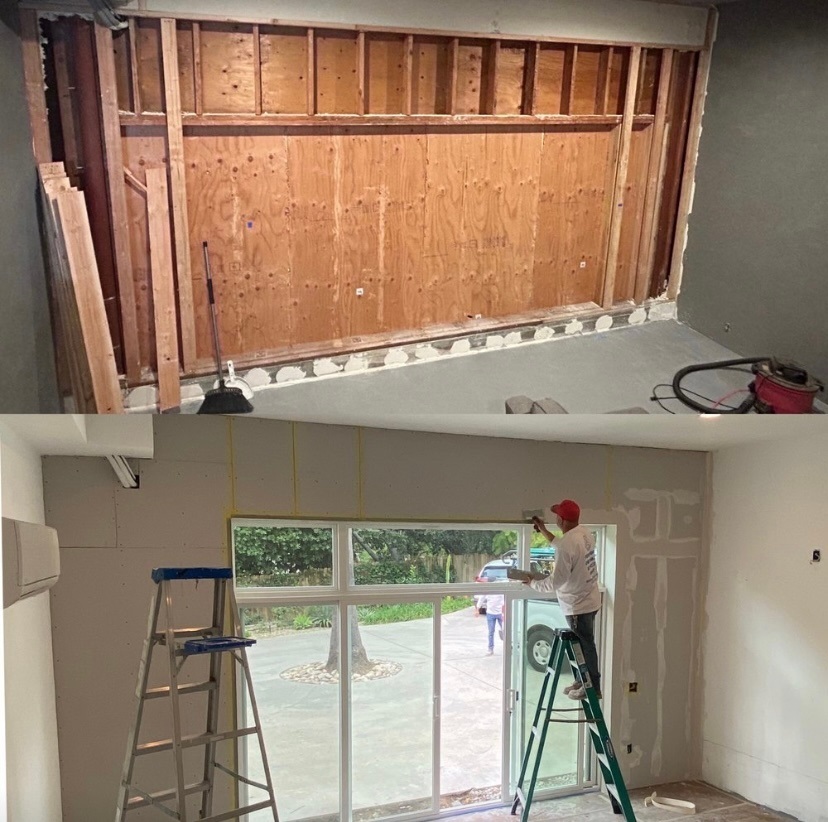
Start by Defining the Actual Scope of Your Project
Before comparing contractors, get clear about what the project actually involves.
Some homeowners need a few damaged areas repaired.
Others are dealing with widespread cracking, water staining, deteriorated finishes, or an exterior that has been patched repeatedly over the years.
A larger renovation may involve new additions, replacement windows, changed door openings, or a complete exterior redesign.
Each situation requires a different approach.
For example, imagine a homeowner planning to replace six windows and repaint the exterior at the same time.
The existing stucco appears mostly intact, but removing the old windows will disturb the surrounding wall areas.
The contractor needs to understand how to integrate the new window flashing with the existing weather-resistant barrier before patching and matching the finish.
Treating that project as a simple cosmetic repair could create problems later.
A clear scope allows you to compare proposals fairly because each contractor is pricing the same work.
Look for Relevant Stucco Experience
General construction experience is valuable, but stucco requires specific knowledge.
A contractor who mainly handles interior remodeling may not have the same level of experience with exterior plaster systems, moisture management, texture matching, and wall transitions.
Ask how often the contractor performs stucco work.
Find out whether the team handles repairs, complete re-stucco projects, new installations, and restoration work.
Different projects present different challenges.
Matching a small patch on a 30-year-old wall requires a different skill set than installing a complete exterior system on a new addition.
The contractor should also understand different finish types and application methods.
Traditional cement-based stucco, acrylic finishes, smooth coats, sand finishes, lace textures, and synthetic exterior systems do not all behave the same way.
Relevant experience helps the contractor recommend an approach that fits the existing home rather than forcing the same solution onto every project.
Check Licensing and Insurance Before Discussing Details
Paperwork may not be the exciting part of a home renovation, but it matters.
Before hiring anyone, verify that the contractor has the appropriate licensing for the work being performed and carries suitable insurance coverage.
Do not rely only on a logo, business card, social media profile, or verbal assurance.
Ask for the relevant information and verify it through the appropriate licensing authority.
Insurance is equally important.
Construction involves ladders, scaffolding, demolition, tools, materials, and workers moving around the property.
Homeowners should understand what coverage is in place before work begins.
A professional contractor should be comfortable discussing these details.
Hesitation, vague answers, or pressure to start immediately without documentation should be treated cautiously.
Ask How the Contractor Diagnoses Existing Damage
A good contractor should investigate before recommending a solution.
If a wall has a crack, the first question should not always be, “What product can cover this?”
The more useful question is, “Why did this crack develop?”
Some cracks are minor and related to normal material movement.
Others may be connected to settlement, poor installation, water intrusion, missing control joints, or movement around windows and doors.
The same principle applies to stains and peeling finishes.
Consider a home with a dark patch below an upstairs window.
One contractor may suggest cleaning the area, patching a visible crack, and repainting the wall.
Another may inspect the window perimeter, evaluate sealant joints, look for flashing concerns, and check whether moisture is entering behind the finish.
The second approach takes longer during the inspection, but it is more likely to address the actual problem.
Review Past Projects That Match Your Type of Home
A portfolio is useful, but relevance matters more than quantity.
Do not just look at photographs of attractive finished homes.
Look for projects similar to yours in age, architectural style, finish type, and scope of work.
If you own an older Spanish-style home, ask to see restoration or texture-matching work on similar properties.
If you are renovating a modern home with a smooth exterior finish, look closely at examples of large smooth-coat surfaces.
Smooth finishes can reveal waves, uneven transitions, and application inconsistencies more easily than heavily textured walls.
Before-and-after photographs can also help you understand the contractor’s experience with damaged areas.
The finished result matters, but photographs taken during preparation and repair can be even more informative.
They may show whether damaged material was properly removed and whether underlying wall conditions were addressed before the finish was restored.
Compare Detailed Proposals, Not Just Final Prices
A low number at the bottom of an estimate can be tempting.
However, two proposals with very different prices may not include the same work.
One bid may cover only visible patching and painting.
Another may include demolition, substrate repair, moisture-barrier work, reinforcement, multiple stucco coats, curing time, texture matching, protective coverings, cleanup, and final coatings.
Without a detailed scope, the cheaper estimate may not actually be cheaper once additional work begins.
Ask each contractor to explain what is included.
The proposal should clearly identify the areas being repaired, the general process, the materials or system being used, and any important exclusions.
For a larger renovation, payment stages and the expected project sequence should also be clear.
A detailed proposal protects both the homeowner and the contractor by reducing misunderstandings later.
Pay Attention to How the Contractor Discusses Water Management
Water management is one of the most important parts of exterior wall performance.
Stucco itself is only one component of a larger assembly.
Windows, doors, flashing, sealants, drainage components, roof intersections, balconies, utility penetrations, and transitions between different exterior materials all affect how water moves around the building.
Ask how these areas will be handled.
Suppose a room addition meets the original house along a long vertical joint.
That transition may look simple after the finish coat is applied, but the underlying connection needs careful detailing.
If the contractor focuses only on making the surface look continuous, the hidden transition may remain vulnerable.
The best conversations about stucco work often include details homeowners cannot see after the project is complete.
Ask About Texture and Color Matching
Repairing stucco is one challenge.
Making the repair blend naturally with the surrounding wall is another.
Older finishes can be difficult to match because years of sun exposure, repainting, weathering, and previous repairs may have changed the appearance of the original surface.
Ask the contractor how texture matching will be approached.
Will a sample area be created?
Will the repaired wall need to be painted from corner to corner for a more consistent appearance?
Is the existing finish painted, integral color, or coated with another product?
For example, a small patch in the center of a large front elevation may remain visible even if the texture match is close.
In that situation, extending the finish or coating across a larger natural break may create a better visual result.
A good contractor should explain these possibilities before the work begins.
Understand the Preparation Process
The final coat gets most of the attention because it is what homeowners see.
Preparation, however, often determines how well the work performs.
The exact process depends on whether the project involves a small repair, extensive restoration, or new stucco installation.
Loose or damaged material may need to be removed.
The substrate may need repair.
Areas around openings may require additional attention.
Reinforcement, lath, weather-resistant barriers, or other system components may be involved depending on the project.
Ask the contractor to explain the process in plain language.
You do not need to become an expert in exterior plaster, but you should understand the major steps.
Be cautious if the explanation is limited to something like, “We patch it and make it look new.”
A home exterior is too important for the process to remain that vague.
Discuss the Project Timeline Realistically
Homeowners naturally want renovation work completed quickly.
Speed is useful, but unrealistic speed can be a warning sign.
Stucco work can involve demolition, preparation, multiple application stages, drying or curing periods, finish work, and painting or coating.
Weather conditions and the size of the project can also affect scheduling.
Ask when the project is expected to start and how long it may take.
Also ask what could reasonably change the timeline.
For example, opening a damaged wall may reveal deteriorated sheathing that was not visible during the initial inspection.
A professional contractor should explain how unexpected conditions will be documented, discussed, and priced before additional work proceeds.
Clear communication about potential delays is better than an unrealistic promise that ignores the nature of renovation work.
Ask Who Will Actually Be Working at Your Home
The person providing the estimate may not be the person supervising the work every day.
That is not necessarily a problem, but homeowners should understand the project structure.
Ask who the main point of contact will be.
Find out who supervises the crew and how questions or concerns should be communicated during the project.
This becomes especially important during larger renovations.
Imagine noticing that the planned texture sample looks different in afternoon sunlight than it did in the morning.
You should know exactly who to contact before the entire wall is finished.
Good project communication can prevent a small concern from becoming an expensive correction.
Read Reviews for Patterns Rather Than Perfection
Online reviews can provide useful information, but individual comments should be considered in context.
Look for repeated patterns.
Do multiple homeowners mention clear communication?
Are there consistent comments about cleanup, punctuality, craftsmanship, or how the contractor handled unexpected problems?
The way a contractor responds to criticism can also be informative.
Construction projects do not always go exactly as planned.
What matters is how problems are communicated and resolved.
A long history of detailed feedback is generally more useful than a handful of short reviews that provide little context.
References from previous clients can also help, particularly for large renovation projects.
Ask questions about the process, not just the finished appearance.
Was the scope clear?
Were changes discussed before extra work was performed?
Did the crew respect the property?
Were concerns addressed promptly?
These details often reveal what the working relationship will actually feel like.
Watch for Red Flags Before Signing a Contract
Some warning signs are easy to recognize.
Others are more subtle.
Pressure to sign immediately should make homeowners cautious.
So should vague estimates, unclear payment expectations, unwillingness to provide documentation, or promises that seem dramatically different from every other professional opinion.
Be careful with a contractor who recommends a major solution without properly inspecting the property.
The opposite situation can also be a concern.
If there are obvious signs of recurring moisture damage and the contractor recommends only a quick cosmetic patch without investigating the source, ask more questions.
Another red flag is poor communication before the project even starts.
If calls are repeatedly missed, appointments are forgotten, and basic questions remain unanswered during the sales process, communication is unlikely to improve once the work begins.
Make Sure the Contract Reflects the Conversation
Verbal discussions are helpful, but important project details should be documented.
The written agreement should match what you believe you are purchasing.
Review the scope of work, payment schedule, materials, project areas, major exclusions, and procedures for changes.
If something important was discussed but does not appear in the agreement, ask for clarification before signing.
For example, if the contractor verbally agreed to protect landscaping, remove debris daily, or repaint an entire elevation after patching, make sure expectations are clearly understood and documented where appropriate.
Renovation projects involve many moving parts.
A clear agreement gives everyone the same reference point.
Choose Communication and Problem-Solving Skills Alongside Craftsmanship
Technical ability matters, but it is not the only quality that makes a contractor suitable for a renovation.
Home improvement projects can uncover unexpected conditions.
A small repair area may become larger once loose material is removed.
Hidden water damage may require additional work.
A discontinued finish may make exact color matching difficult.
The contractor should be able to explain these situations clearly and present reasonable options.
Good communication does not mean promising that nothing will go wrong.
It means explaining what has been found, why it matters, what choices are available, and how those choices affect cost or schedule.
That ability becomes especially valuable during larger exterior renovations.
The Right Stucco Contractor Should Make the Process Clear
Choosing a contractor should not feel like guessing.
Start by understanding the scope of the renovation and then compare professionals based on relevant experience, documentation, inspection methods, detailed proposals, communication, and past work.
Look beyond the surface.
The most important parts of a stucco project are not always the ones visible in the final photograph.
Preparation, moisture management, transitions, reinforcement, and proper application all contribute to long-term performance.
A good contractor should be willing to explain the process without hiding behind technical language.
They should also be realistic about cost, timing, and the possibility of discovering hidden conditions during renovation.
The goal is not simply to hire someone who can make the wall look good when the scaffolding comes down.
The goal is to choose a professional who understands the complete exterior system and can deliver work that fits the home’s architecture, renovation goals, and long-term maintenance needs.
Taking extra time during the selection process can prevent rushed decisions, unclear expectations, and repeated repairs later.
For homeowners, that careful selection may be one of the most important decisions of the entire renovation.